6–10%
Target Cash-on-Cash
Stabilized years 1–3

Disciplined Real Estate Investing
TRI Capital Partners helps busy professionals understand and access multifamily real estate opportunities through disciplined underwriting, practical operating experience, and transparent communication.
Education first. Clear information. No pressure.
Investment Snapshot
Each opportunity is evaluated independently, but TRI begins with a defined acquisition profile and disciplined target metrics.
6–10%
Target Cash-on-Cash
Stabilized years 1–3
15–20%
Target IRR
20–80
Units
Target property size
5 Years
Target Hold Period
$25K
Minimum Investment
Quarterly
Target Distribution Frequency
Target returns, hold period, and distribution schedule are projections only and are not guaranteed. Actual results vary by property, market conditions, financing, execution, and other risks described in the applicable offering documents.
The Problem
Many professionals want real estate exposure, but do not have the time, resources, or desire to operate properties themselves.
You have a career, a business, and a life outside of real estate.
It is difficult to separate sound opportunities from hype, especially in unfamiliar markets.
You want a disciplined, realistic approach focused on long-term value.

The Investment Thesis
TRI targets multifamily opportunities where disciplined buying and stronger operations may create long-term value.
If the numbers do not hold up under pressure, we walk away.
A basis that supports the plan.
Employment and housing fundamentals.
Practical improvements and stronger operations.
Downside, debt, and execution reviewed first.
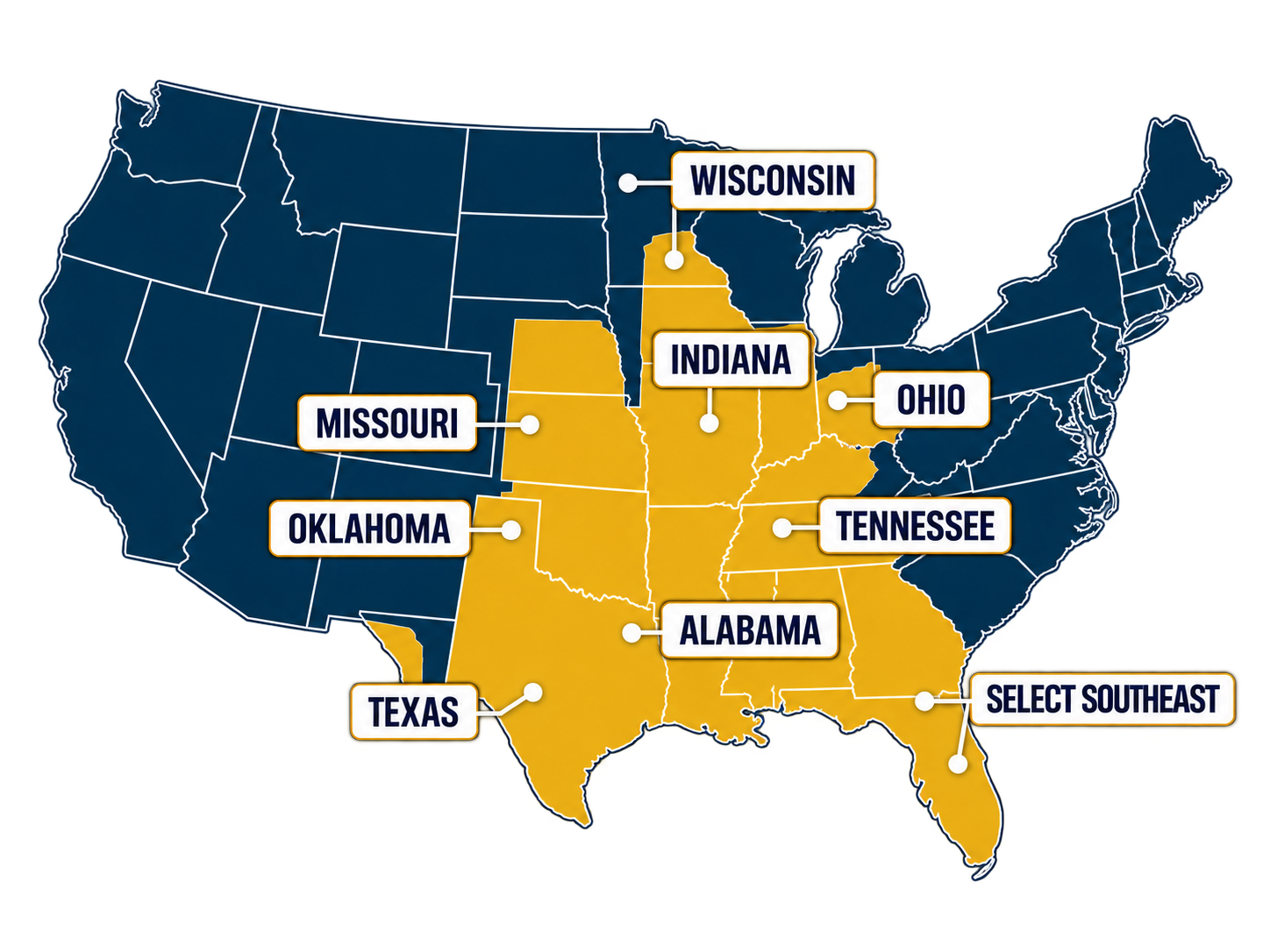
Target Markets
TRI evaluates select markets where acquisition basis, employment, rental demand, and long-term growth potential support a disciplined multifamily strategy.
Investment Criteria
A property must fit the market, operating plan, and risk framework—not simply meet a unit count.
20+
Units
Multifamily Properties
and Apartment Communities
How TRI Evaluates an Opportunity
Each opportunity is reviewed through the same structured process before it can advance.
Review market fundamentals and alignment with TRI’s criteria.
Analyze returns, financing, and sensitivity to key assumptions.
Assess physical condition, unit mix, and value-add potential.
Stress-test assumptions and evaluate downside scenarios.
Advance only when the opportunity meets TRI’s standards.
Current Pipeline
Teeserville, Kentucky
LOI Submitted
San Antonio, Texas
Financial Review
Fayetteville, Arkansas
Financial Review
Tulsa, Oklahoma
Financial Review
Plano, Texas
Financial Review
Jefferson City, Missouri
Financial Review
Pipeline information is informational only. Opportunities may change, be withdrawn, or be removed, and nothing shown constitutes an offer or guarantee.
Behind TRI Capital Partners

Brad Ober
Managing Partner · TRI Capital Partners
Meet Brad Ober
Managing Partner, TRI Capital Partners
Brad Ober’s experience spans corporate leadership, business operations, project management, and hands-on property ownership. He currently serves as an executive within a multibillion-dollar company and brings a disciplined, systems-driven perspective to investment decisions.
His real estate experience includes long-term and short-term rentals, single-family investments, BRRRR-style projects, 1031 exchanges, and multifamily exposure. As both an active owner and limited partner investor, Brad understands real estate from the operator’s side and the investor’s side of the table.
At TRI Capital Partners, Brad applies a straightforward philosophy: understand the risk, manage by the numbers, and only pursue opportunities where the fundamentals support the plan.
“Understand the risk. Manage by the numbers.”
Strategic Network
TRI Capital Partners draws on specialized multifamily, finance, legal, tax, structuring, compliance, and investor-relations experience to support opportunities from initial evaluation through ongoing investor communication.

Strategic Partner
Multifamily and Syndication
Justin Brennan brings experience across multifamily real estate, construction, land planning, acquisitions, operations, finance, and syndication.
His perspective supports opportunity sourcing, market evaluation, underwriting, financing coordination, operating setup, and the infrastructure required to move a transaction from analysis through execution.
Areas of Support
Who TRI Works With
TRI Capital Partners partners with busy professionals who want real estate exposure without taking on the responsibilities of active ownership.
Strong Fit
Not the Right Fit
Every investment opportunity involves risk. Investors should review the applicable offering documents and consult their own legal, tax, and financial professionals before investing.
Free Investor Guide
A practical guide to evaluating the operator, the opportunity, and the risk before you invest.

Built for busy professionals who want clarity without sales pressure.
Frequently Asked Questions
Review the most common questions about TRI’s investment approach, target framework, investor process, and risk considerations.
TRI focuses on multifamily properties with 20 or more units. We look for operational or value-add potential, durable housing demand, and a practical path to improved performance.
TRI’s primary markets are Missouri and Tennessee, with expansion markets that include Georgia, Ohio, and Texas. Every property is reviewed individually; being located in a target state does not automatically make it a fit.
TRI’s current framework uses a target cash-on-cash range of 6–10% during stabilized years 3–7 and a target IRR range of 15–20%. These targets are projections only and are not guaranteed. Actual results vary by opportunity.
The current target hold period is approximately five years. The actual timing may be shorter or longer depending on property performance, financing, market conditions, and available capital options.
The current target minimum is $25,000. The actual minimum and investor eligibility requirements will be stated in the applicable offering documents.
No. Quarterly distributions may be targeted, but they depend on property performance, operating reserves, lender requirements, available cash flow, and the terms of the specific offering.
TRI reviews the market, existing operations, financing, capital needs, income and expense assumptions, downside scenarios, exit assumptions, and the team required to execute the business plan.
Brad brings experience as both an active owner and limited partner investor. Any sponsor investment and alignment terms for a specific opportunity will be disclosed in that offering’s legal documents.
The Investor Inquiry helps TRI understand your investing experience, priorities, capital range, preferred timeline, and the questions that matter most to you. Submitting it does not create an obligation to invest.
The checklist covers important questions for evaluating an operator, market, underwriting, business plan, communication process, and potential investment risks.
No. The Investor Inquiry is an information-gathering step. It is not an offer, subscription agreement, or commitment to invest.
Target returns, hold periods, and distributions are projections only and are not guaranteed. Each opportunity is governed by its applicable offering documents.
Take the Next Step
Tell us about your investment experience, priorities, and preferred timeline. We will use your responses to understand what matters to you and determine what information would be most useful next.
No investment commitment. Start with the path that matches where you are today.